PBT Bristles: Key Properties for Toothbrush Manufacturing
- Share
- Issue Time
- Aug 4,2026
Summary
Discover PBT bristles for toothbrush manufacturing, including softness, flexibility, water absorption, durability, and practical material selection.
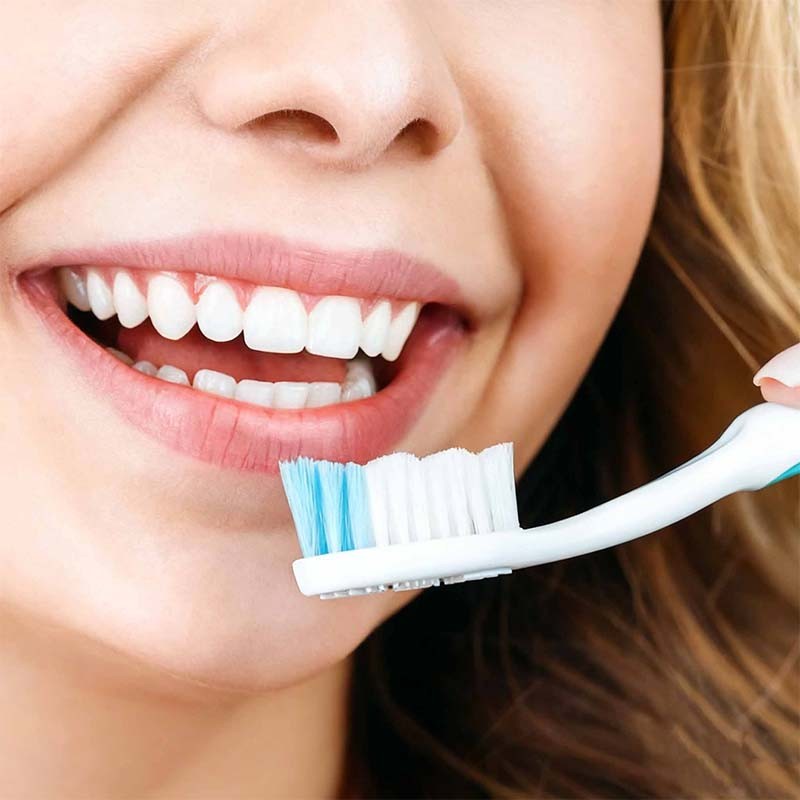
For toothbrush manufacturers, choosing the right toothbrush filament is a product-development decision, not simply a material decision. Bristle material affects brushing feel, flexibility, wet-state performance, wear, and the consistency of the finished toothbrush. Among synthetic plastic brush filament materials, PBT (Polybutylene Terephthalate) is widely used when manufacturers need a balanced combination of flexibility, dimensional stability, low moisture absorption, and durability. However, the performance of a PBT bristle depends not only on the polymer but also on filament diameter, length, tip design, geometry, heat setting, and manufacturing consistency.
What Makes PBT Bristles Suitable for Toothbrushes?
PBT is a polyester-based engineering polymer with relatively low water absorption and good dimensional stability. These characteristics are particularly relevant to toothbrushes because bristles are repeatedly exposed to water, saliva, toothpaste, and mechanical brushing. For manufacturers, the key question is not simply whether PBT is a good material. It is: How do PBT properties affect the performance of the finished toothbrush? The answer can be understood through four key properties: softness, flexibility, water absorption, and durability.
PBT Bristle Softness
Softness directly affects user comfort and is especially important for sensitive-care and premium toothbrushes. The perceived softness of a PBT bristle is influenced by several factors: Filament diameter, Free length, Cross-section, Tip geometry, Tuft density, Heat-setting conditions. A finer filament generally bends more easily, while filament length and geometry also influence bending stiffness. Therefore, manufacturers should define softness through a complete filament specification rather than relying only on the material name.
Tapered PBT for Fine-Tip Toothbrushes
Tapered PBT bristles provide a fine tip while maintaining a stronger base. This configuration can be considered for sensitive, gum-care, premium, and fine-tip toothbrushes where gentle contact and controlled flexibility are required. For product development, the target should be controlled softness, not simply the softest possible filament.
PBT Bristle Flexibility & Elastic Recovery
Flexibility determines how easily a bristle bends during brushing, while elastic recovery describes its ability to return after deformation. A well-designed toothbrush filament needs enough flexibility to follow tooth surfaces while retaining sufficient stiffness and recovery to maintain effective contact.
For example:
· Sensitive toothbrushes require controlled flexibility and gentle contact.
· Daily-use toothbrushes need a balance of flexibility and cleaning force.
· Electric toothbrushes require consistent bending and recovery under repeated movement.
· Premium toothbrushes may require fine filaments with precise mechanical behavior.
Filament diameter, length, geometry, and heat-setting conditions can all influence the final bending and recovery behavior. This is why an experienced toothbrush filament supplier should evaluate PBT according to the finished brush application rather than offering the same specification for every product.
PBT Bristle Water Absorption
Water absorption is particularly important for toothbrush bristles because the product operates in a wet environment. During normal use, filaments experience repeated exposure to water, saliva, toothpaste, and wet/dry cycles. Moisture can influence polymer stiffness, flexibility, and dimensional stability. PBT has relatively low moisture absorption compared with many conventional nylon materials. BrushMake's PBT toothbrush filament data lists approximately 0.35% water absorption for its tapered and non-tapered PBT filaments. For manufacturers, the practical benefit is not simply a low laboratory value. Lower moisture sensitivity can contribute to more predictable bristle behavior between dry and wet conditions. This can be valuable for toothbrushes that require stable brushing characteristics throughout repeated daily use. However, water absorption should be evaluated together with stiffness, recovery, and long-term performance rather than as an isolated specification.
PBT Bristle Durability
Durability means more than resistance to filament breakage. During repeated brushing, individual bristles experience bending, mechanical contact, abrasion, and deformation. Over time, changes may occur in: Bristle stiffness, Elastic recovery, Tip condition, Shape retention, Splaying, Overall filament appearance. Published toothbrush research has shown that PBT bristle stiffness can decrease after extended use, demonstrating why long-term performance should be evaluated through actual toothbrush testing rather than inferred only from initial material properties. For manufacturers, the objective is therefore not simply to select a “strong” filament, but to achieve stable functional performance throughout the intended product life.
From PBT Material Properties to Toothbrush Performance
The relationship between material properties and the finished toothbrush can be summarized as:
| PBT Property | Bristle Behavior | Product Impact |
| Low water absorption | Stable moisture response | Consistent wet-state performance |
| Controlled stiffness | Predictable bending | Controlled brushing force |
| Elastic recovery | Recovery after deformation | Better bristle positioning |
Wear resistance | Reduced mechanical degradation | Longer functional performance |
Fine diameter | Easier bending | Softer brushing feel |
Tapered tip | Fine contact area | Gentle and targeted contact |
This demonstrates why toothbrush manufacturers should evaluate the complete filament specification rather than comparing polymer names alone.
Material + Diameter + Length + Tip + Geometry + Processing = Final Bristle Performance
BrushMake: Application-Focused Toothbrush Filament Solutions
BrushMake approaches PBT filament selection from the perspective of the finished toothbrush. Our toothbrush filament solutions include PBT options in both tapered and non-tapered configurations, with specifications that can be adapted to different product requirements. Depending on the application, manufacturers can evaluate:
Material → Diameter → Tip → Length → Geometry → Processing → Quality Control
BrushMake also supports customization of filament specifications such as diameter, color, length, cross-section, and other application-related requirements. For manufacturers comparing different plastic brush filament materials, the goal is not simply to select the lowest-cost option. The right filament should provide the required brushing performance, production consistency, and overall product value.
Conclusion
PBT bristles offer a useful combination of low water absorption, controlled flexibility, dimensional stability, and durability for many toothbrush applications. However, the final performance of a PBT bristle is determined by the complete filament design and manufacturing process—not by the polymer alone. For toothbrush manufacturers, the most reliable approach is to define the target product performance first, then optimize material, diameter, tip design, geometry, processing, and quality control around that target. A qualified PBT bristles supplier should therefore provide more than filament. The supplier should provide consistent quality, customization capability, application knowledge, and technical support from material selection through finished-brush development.
BrushMake connects material science with real toothbrush manufacturing requirements to help manufacturers develop consistent and application-specific toothbrush filament solutions.