PA612 vs PA610 Toothbrush Filaments: Key Differences for Manufacturers
- Share
- Issue Time
- Sep 17,2026
Summary
Compare PA612 and PA610 toothbrush filaments for softness, moisture stability, recovery, durability and cost, helping manufacturers choose the right material.
For toothbrush manufacturers, a toothbrush filament affects brushing feel, recovery, moisture stability, tufting consistency, product positioning and cost. PA612 and PA610 are important long-chain nylon bristle options. Neither is universally better. The choice depends on design, softness, diameter, tip geometry, tuft density, moisture exposure, production conditions and cost.
PA612 Toothbrush Filament
PA612 toothbrush filament, also called nylon 612 toothbrush filament, is a long-chain polyamide monofilament. Manufacturers commonly evaluate it when a brush requires softer contact, good flexibility, elastic recovery and stable wet-use performance.
PA612 may suit premium soft-care, sensitive-gum and children’s toothbrushes. With suitable diameter and tip design, it can provide smooth feel and recovery after bending. Its relatively low moisture absorption may reduce dry-to-wet feel change.
BrushMake's PA612 toothbrush filament is available from 0.05 to 1.2 mm, with customized color, cut length, cross-section and straight or crimped form.
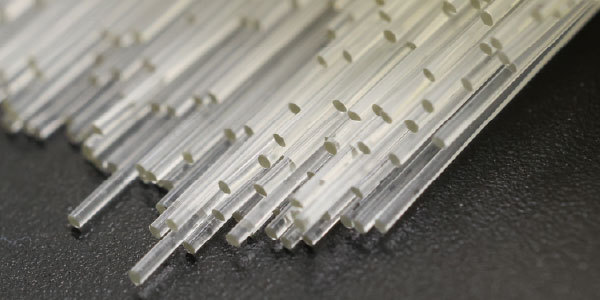
PA612 Toothbrush Filament
PA610 Toothbrush Filament
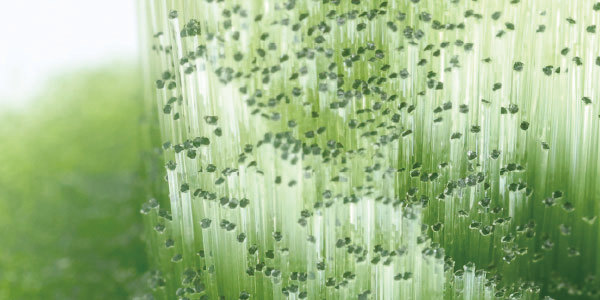
PA610 toothbrush filament, or nylon 610 toothbrush filament, is another long-chain polyamide monofilament. It is considered when a manufacturer needs reliable flexibility, recovery and moisture stability with a more controlled material cost.
PA610 is not simply an inferior PA612; it offers a different performance-cost balance. At comparable geometry, it is generally slightly firmer and more controlled, suitable for everyday, medium-firm and cost-conscious programs.
BrushMake's PA610 toothbrush filament also supports 0.05–1.2 mm diameters and customized color, length, shape and cross-section. Final performance should be confirmed on the customer’s own tufting line.
PA610 Toothbrush Filament
PA612 vs PA610: Practical Comparison
| Property | PA612 | PA610 | Relevance |
| Brushing feel | Softer and smoother | Balanced, slightly firmer | Supports soft-care or everyday positioning |
| Flexibility | High | Good | Influences comfort and brushing action |
| Recovery | Strong candidate for repeated bending | Good, controlled recovery | Helps retain bristle shape |
Moisture stability | Very good | Good | Supports consistent wet-use performance |
Fine-tip use | Often evaluated for tapered tips | Suitable after validation | Important for sensitive-care designs |
Cost position | More premium-oriented | More cost-balanced | Assess per finished brush |
These are qualitative directions, not universal guarantees. Results vary with grade, processing, geometry and test method.
Softness, Moisture and Durability
At the same diameter and tip geometry, PA612 is generally softer, while PA610 tends to provide a firmer, controlled action. Softness also depends on exposed length, tapering, end-rounding, cross-section, tuft density and brush-head flexibility. Therefore, complete brush-head samples are more reliable than material names alone.
Toothbrush filaments face water, toothpaste, humidity and repeated wet/dry cycles. BrushMake's current product-level reference data lists:
| Grade | Density | Melting point | Water absorption |
| PA612 | 1.06 g/cm³ | 214°C | 1.60% |
| PA610 | 1.08 g/cm³ | 218°C | 1.80% |
| PBT | 1.30 g/cm³ | 230°C | 0.35% |
PP | 0.90 g/cm³ | 163°C | 0.01% |
These are not universal specifications. PA612 generally has the lower moisture absorption, while PA610 can meet many everyday wet-use needs. A PBT bristle or PP plastic brush filament may be considered when low water absorption or cost is the priority. See BrushMake's toothbrush filament.
For durability, check diameter tolerance, straightness, moisture condition, feeding, cutting, tufting, tip quality and batch consistency. Do not transfer settings between nylon grades without testing. Compare PA612 and PA610 with the same diameter, tip, tuft density and brush head in dry and wet conditions. Sample testing before mass production is recommended.
How to Choose Toothbrush Filaments?
Consider PA612 first for softer contact, premium soft-care positioning, fine tapered tips, stable wet-use feel or strong recovery. Consider PA610 first for balanced flexibility, controlled brushing action, reliable nylon performance and a controlled cost target. These are starting points, not absolute conclusions.
BrushMake supplies PA612, PA610, PBT and PP brush filament. Review the PA612 brush filament, compare the PA610 brush filament, or explore the complete toothbrush filament range. Share your type, softness, diameter, tip design, quantity and production requirements for samples and recommendations.
Technical note: The numerical values are BrushMake product-level reference data. Actual performance depends on grade, formulation, processing, geometry, conditioning and test method. Validate samples before mass production.