Broom Quality Standards: How Filament Content Affects Broom Performance
- Share
- Issue Time
- Jun 23,2026
Summary
Compare broom filament materials, quality standards, and performance factors. Discover how BrushMake creates durable brush filament.
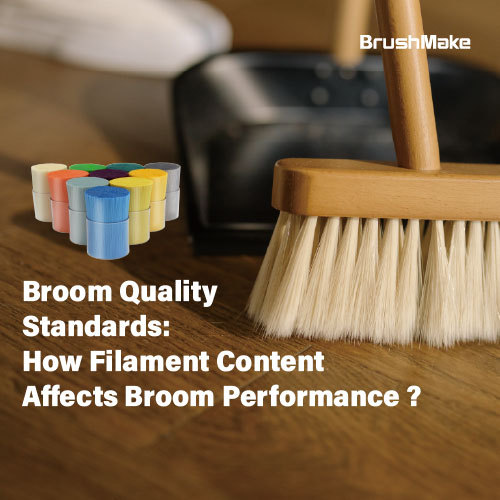
Most buyers compare brooms on price. Engineers compare them on filament content — the density, diameter, and polymer composition of the broom filament itself. Field sampling has documented up to a 40% difference in bristle content between visually similar products, meaning two brooms at the same price can deliver very different service life. Understanding the engineering behind broom bristles material is what separates a broom that lasts a season from one that lasts a year.
What "Filament Content" Means for Broom Bristles Material
Filament content describes how much usable bristle material is packed into a broom head, and how that brush filament is structured — independent of style (strip, wafer, tube, or gutter broom). For gutter and rotary brooms, fill density per mounting hole is a primary performance variable: increasing fill density by design can extend wear life by up to 60% versus a sparsely filled equivalent. For wire-core gutter brooms, tempering matters as much as fill count — oil-tempered wire outlasts oil-coated wire by roughly 40% in curb-clearing use. The takeaway: the cheapest broom filament is rarely the lowest cost-per-year option once service life is factored in.
Broom Bristles Material Comparison
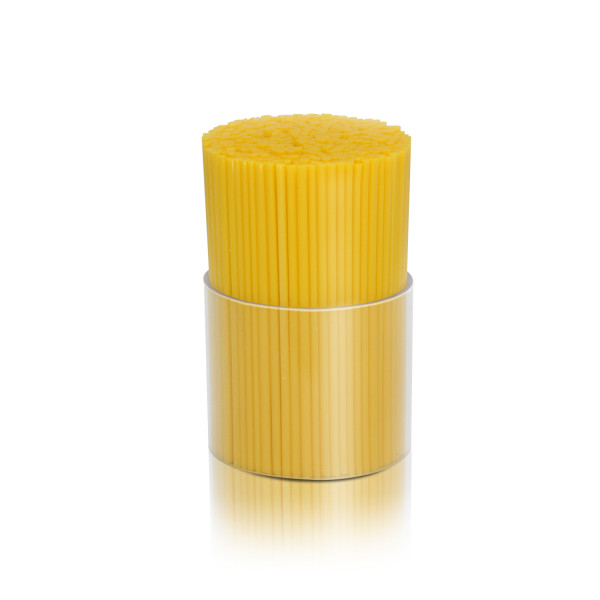
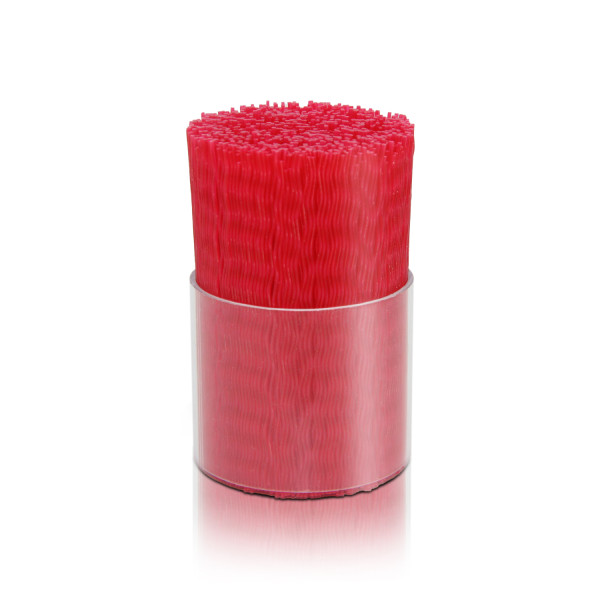
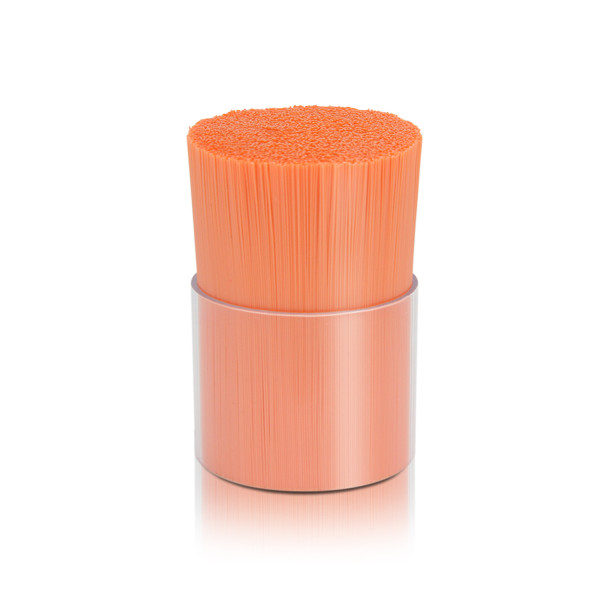
No single polymer is universally "best." Each broom bristles material is engineered for a specific stress profile:
Choosing brush filament material is a sweeping-environment decision first, cost second — mismatched material is the leading cause of premature bristle failure.
Quality Standards and Performance Metrics
Material choice alone doesn't guarantee performance; consistency does. Industrial broom filament is tested against defined benchmarks: diameter held within a narrow tolerance across the 0.3–2.2mm range; tensile strength above roughly 35 MPa to resist snapping under debris impact; abrasion resistance under 5% mass loss after 1,000+ cycles; bend-recovery of 92%+ for flagged filament, since poor recovery causes permanent splaying; and moisture absorption below 0.5% for wet outdoor use. Batch-to-batch melt flow index (MFI) consistency ties this together — variation beyond 5% between batches signals production drift and inconsistent finished-broom performance.
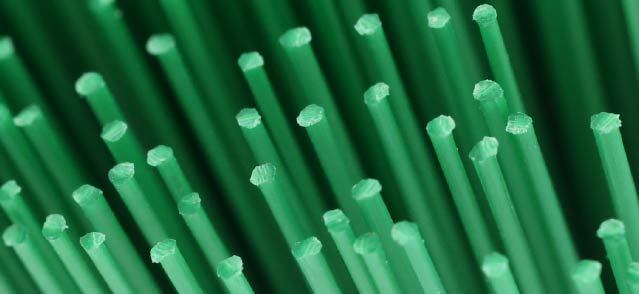
Close-up view of broom bristles
How Density and Diameter Shape Performance
Two filaments of identical material can perform very differently by geometry. Higher density increases floor contact area, which is why dense brush filament suits commercial and industrial sweeping over light household use. Diameter governs the work a filament can do: thicker strands scrub aggressively against caked debris, while thinner strands flex into fine gaps for superior dust capture. Flagged (split-tip) broom filament is engineered specifically to expand fine-particle capture without sacrificing structural diameter.
Evaluating a Broom Filament Supplier
Before bulk ordering, request: material composition and compliance certificates; documented batch testing for MFI and diameter consistency; transparency on extrusion temperature and quenching, which determine tensile strength and recovery; and evidence of repeat orders — one of the most reliable proxies for consistent quality and on-time delivery. extrusion temperature and quenching controls, and evidence of repeat orders — one of the most reliable real-world proxies for consistent quality and on-time delivery.
BrushMake's Standard for Broom Filament and Brush Filament
This is the standard we engineer to at BrushMake. Over two decades of brush filament manufacturing, we've supplied broom filament in PP, PVC, and PET— including flaggable PET engineered to flare for extended coverage, and PP filament built for outdoor broom durability. Beyond raw filament, we also design and supply tufting, cutting, flattening, and splitting/curling equipment calibrated to our own filament specs, helping customers keep density and structural consistency under control on their own production lines. Every batch ships under documented quality testing, with diameter, color, and flagging customized to each client's MOQ and application. Long-term partners cite consistent filament quality and fast sample turnaround as reasons for multi-year repeat business — trust that, in this industry, is only built through repeatable performance.
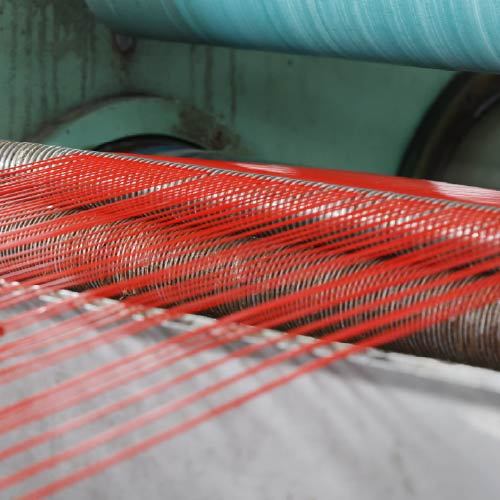
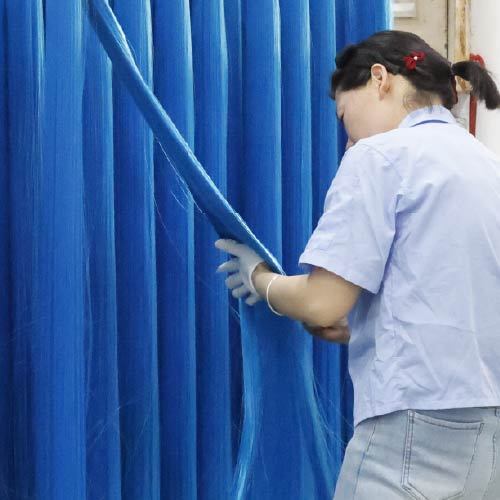
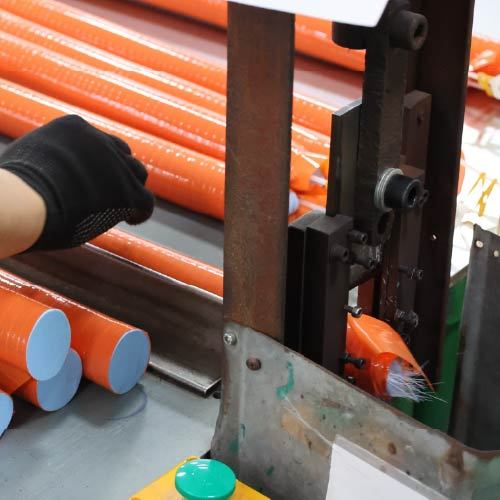
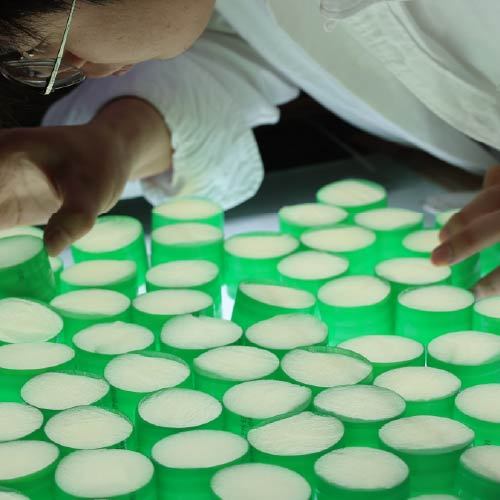
Broom Filament Production Process
Final Thoughts
Broom filament quality is not a marketing claim — it's a measurable mix of material science, density engineering, and manufacturing discipline. Buyers who evaluate brush filament against real specifications, not price alone, consistently see lower cost-per-year-of-service and fewer field failures. To review the engineering behind a specific broom bristles material, or request samples, explore BrushMake's broom filament range or contact our team directly.